

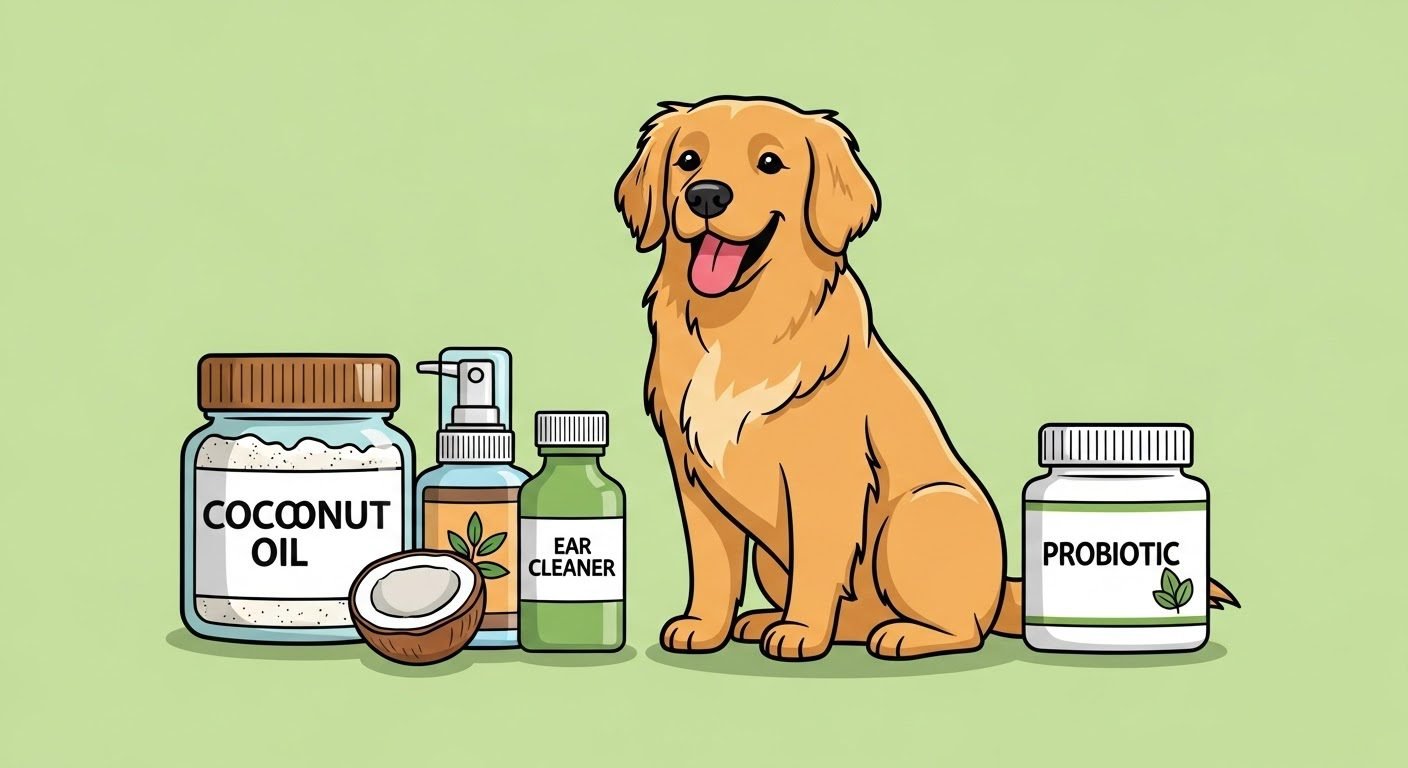
When my dog, Bella, first started scratching her ears nonstop and licking her paws, I didn’t think much of it. But soon, a sour smell and red patches began to appear — a clear sign of a yeast infection. Like most pet parents, I wanted to help her without jumping straight to harsh medications. That’s when I began my search for natural remedies for dog yeast infection — and honestly, the results were amazing.
Yeast infections in dogs are more common than we think. They usually show up in the ears, paws, or skin folds, causing itchiness, redness, and a funky odor. The main culprit is an overgrowth of yeast (often Malassezia), which can happen when your dog’s immune system or skin balance is off.
Understanding the Root Cause
From my experience, most yeast infections in dogs are linked to diet, moisture, and allergies. If a dog eats too many carb-heavy foods or gets wet frequently without proper drying, yeast can thrive. In Bella’s case, it was a combination of food sensitivity and ear moisture after swimming.
A balanced diet with fewer carbs and more probiotics made a big difference. I noticed that when her gut was healthy, her skin stayed healthier too. That’s why treating yeast naturally means focusing on both the inside and outside.
1. Coconut Oil for Dogs’ Yeast Infections
One of the most effective and gentle remedies I’ve tried is coconut oil. It’s naturally antifungal, antibacterial, and soothing. I gently melted a teaspoon between my hands and massaged it into Bella’s paws and ears (just the outer part, never deep inside). It helped calm the itching within a few days.
If you’re looking for a good one, Viva Naturals Organic Coconut Oil for Pets on Amazon is excellent. I’ve used it for months it’s pure, unrefined, and even works for cooking or mixing with your dog’s food. A small amount daily can support both digestion and skin health.

2. Natural Dog Ear Yeast Remedy
When yeast hits the ears, it can be tricky because moisture gets trapped. Bella’s ears were a bit gunky and smelled like old bread classic signs of yeast. I started using a natural ear cleaning solution made with aloe and witch hazel. Cleaning her ears gently every few days kept the infection under control.
Later, I found Zymox Pet Ear Cleanser on Amazon honestly a game changer. It’s enzyme-based, safe, and super easy to use. Within a week, her ears were much less itchy, and the smell was gone. I also noticed that regular use prevented new infections from forming after baths or swimming.

3. Probiotics for Internal Support
I learned the hard way that treating yeast topically isn’t enough. You need to fix the internal balance too. Adding probiotics for dogs’ stomachs can help strengthen gut health, which directly affects yeast control.
I tried Purina FortiFlora Probiotic for Dogs after my vet recommended it. It’s a powder that mixes easily with food and actually smells like something dogs love. Bella’s digestion improved, her coat looked shinier, and yeast flare-ups became much less frequent.

4. Dog Paw Yeast Infections
Yeast loves paws especially between the toes. If your dog constantly licks or chews their paws, it might not just be boredom. I used a homemade rinse with apple cider vinegar and water (1:1 ratio) for Bella’s paws. It helped reduce itching and odor naturally. Just make sure to dry paws thoroughly after soaking, since moisture feeds yeast.
A little coconut oil afterward adds a soothing barrier and keeps the skin soft. Over time, the licking stopped completely.
5. The Role of Diet
Switching to a low-carb, grain-free dog food helped reduce yeast growth from the inside out. Yeast feeds on sugar, so cutting out starchy treats like white rice, bread, or potatoes really helped. Instead, I focused on proteins, healthy fats, and fiber.
Adding natural antifungals like oregano oil (in vet-approved doses) or small amounts of plain yogurt also supported her gut balance. When I made these changes consistently, Bella’s ears stayed clean, her paws stopped smelling, and her skin stayed calm.
6. When to See a Vet
Natural remedies work beautifully for mild to moderate yeast infections, but if your dog’s skin becomes inflamed, painful, or develops scabs, always consult a vet. Sometimes yeast infections can lead to bacterial infections that need medical attention.
In my case, I combined vet guidance with these natural yeast infection remedies — and it worked wonders. Her coat is now shiny, her paws smell fresh, and she’s so much more comfortable.
Final Thoughts
Treating a yeast infection in dogs naturally takes patience and consistency, but it’s worth it. A mix of gentle topical care, probiotics, and diet changes can make a huge difference. Seeing Bella happy, itch-free, and healthy again reminded me that natural solutions can be incredibly powerful — and safe.
If your pup is struggling with itchy ears, smelly paws, or irritated skin, start simple. Keep their ears clean, feed a gut-friendly diet, and use trusted products like Viva Naturals Coconut Oil, Zymox Ear Cleanser, and Purina FortiFlora Probiotics. You’ll be surprised at how quickly you notice results.
Your dog deserves relief — and with these natural remedies, you can give it safely and effectively.