
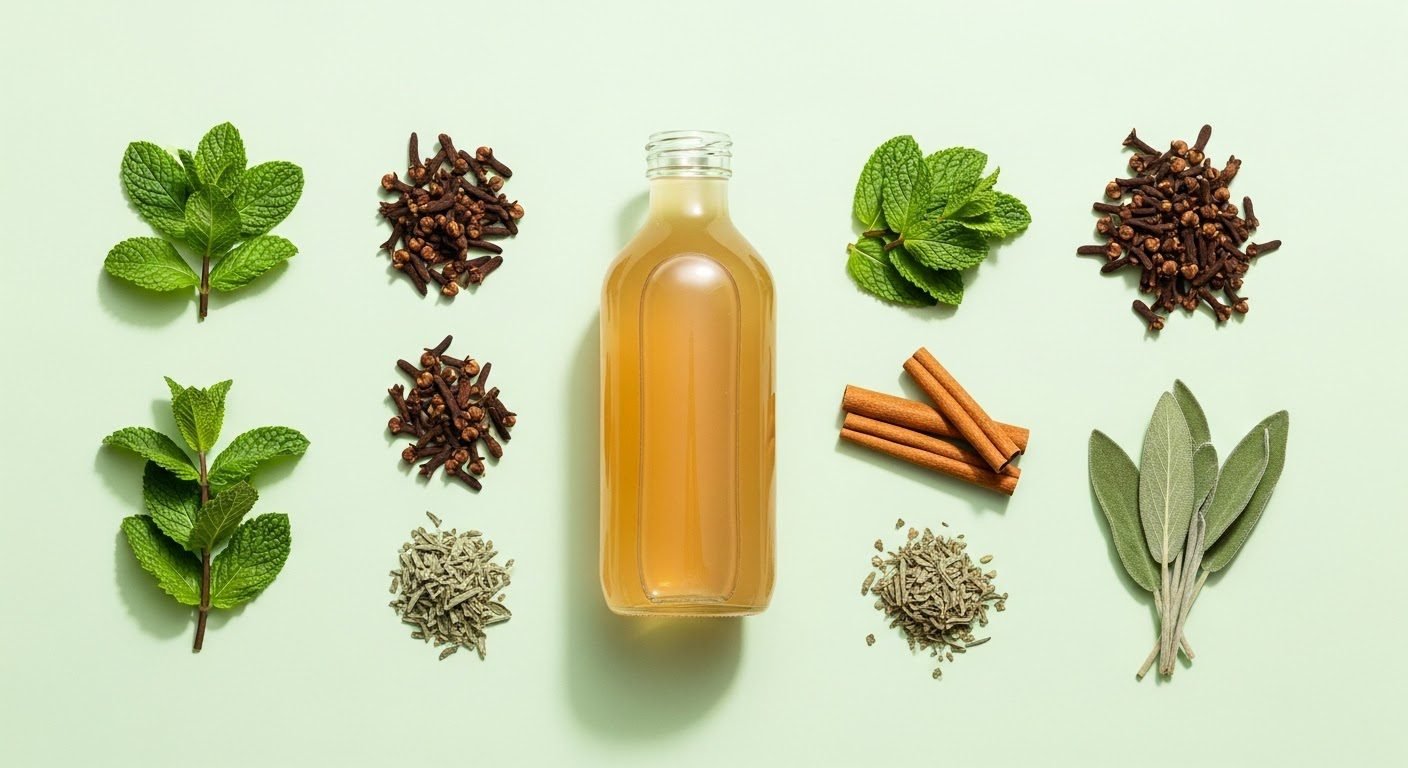
Maintaining good oral hygiene goes beyond brushing and flossing. Mouthwash is a simple, effective way to reach bacteria hiding in areas your toothbrush can’t touch. But many store-bought products contain alcohol and harsh chemicals that can dry out your mouth or irritate gums. A diy herbal mouthwash offers a natural, safe, and effective alternative, helping keep teeth clean, gums healthy, and breath fresh.
Using herbs and essential oils provides antibacterial mouth rinse natural benefits while supporting overall oral wellness. The author has personally tested several herbal combinations and found that using a homemade herbal mouthwash consistently improves freshness and reduces gum irritation.
Why Choose a Herbal Mouthwash?
Herbal mouthwashes are naturally antibacterial, soothing, and gentle. Ingredients like peppermint, clove, and cinnamon help reduce bacteria, fight bad breath, and support gum health. Unlike commercial mouthwashes, herbal rinses do not strip enamel or disrupt your mouth’s natural pH balance.
The author noticed a reduction in gum inflammation and less morning breath after switching to a diy herbal mouthwash routine. It’s simple to make, cost-effective, and customizable based on your taste and oral care needs.
Essential Ingredients for Your Herbal Mouthwash
Some of the most effective herbs and oils for oral hygiene include:
- Peppermint or spearmint leaves – freshens breath and reduces bacterial growth.
- Cloves – contain eugenol, a natural antibacterial and anti-inflammatory agent.
- Cinnamon sticks or powder – naturally antibacterial and provides a warming, fresh taste.
- Sage or thyme – helps soothe inflamed gums and fight infection.
- Essential oils (optional) – like tea tree or peppermint oil for extra antibacterial support.
The author recommends using TheraBreath Healthy Gums Oral Rinse from Amazon for days when extra care is needed; it’s gentle, natural, and complements herbal rinses perfectly.

DIY Herbal Mouthwash Recipe
Ingredients:
- 1 cup water
- 1 teaspoon cloves
- 1 cinnamon stick
- A handful of fresh peppermint or spearmint leaves
- Optional: 1 drop of tea tree or peppermint essential oil
Instructions:
- Boil the water and add cloves, cinnamon, and mint leaves.
- Simmer for 5–7 minutes.
- Remove from heat and let cool completely.
- Strain the liquid into a glass bottle.
- Add essential oils if desired.
- Use 2–3 times daily as a mouth rinse for fresh breath and cleaner gums.
This simple rinse works as an antibacterial mouth rinse natural alternative to store-bought options.
Benefits of Using Herbal Mouthwash
Regular use of herbal mouthwash helps:
- Reduce plaque and bacteria in hard-to-reach areas.
- Freshen breath naturally without alcohol or chemicals.
- Soothe inflamed gums and reduce sensitivity.
- Support overall oral hygiene alongside brushing and flossing.
The author observed fewer instances of gum irritation and improved morning breath within two weeks of consistent use.
Tips for Best Results
- Swish gently for 30–60 seconds to allow the antibacterial properties to work.
- Avoid swallowing the mouthwash.
- Store in the refrigerator for up to a week to keep herbs fresh.
- Combine with regular brushing, flossing, and occasional oil pulling for maximum oral benefits.
When to See a Dentist
While herbal mouthwash is effective, it cannot replace professional dental care. See a dentist if you experience:
- Persistent gum bleeding or swelling
- Severe bad breath that doesn’t improve
- Toothache or sensitivity
- Signs of infection
Herbal mouth rinses work best as a supportive part of a complete oral hygiene routine.
Final Thoughts
Creating a diy herbal mouthwash is simple, effective, and safe. Using natural herbs and essential oils as an antibacterial mouth rinse natural keeps your teeth and gums healthy while freshening your breath without harsh chemicals. With consistent use and good oral care habits, this herbal approach supports long-term oral wellness, stronger gums, and a cleaner, brighter smile.