

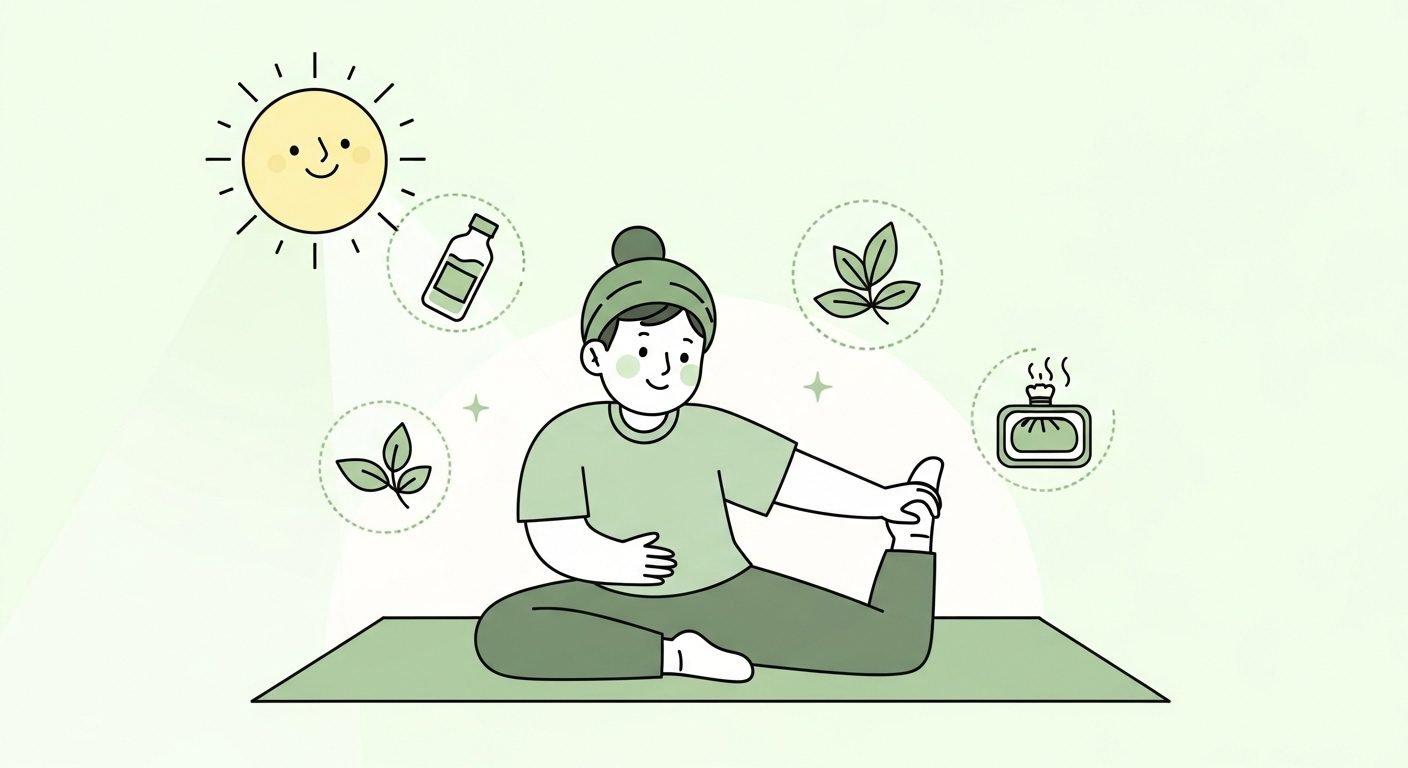
Muscle cramps those sudden, sharp pains that seem to strike at the worst possible moment can be both frustrating and uncomfortable. Whether it’s a calf cramp in the middle of the night, a hamstring tightening after a long walk, or a foot cramp during yoga, these involuntary muscle contractions are something almost everyone experiences at some point.
While they usually pass on their own, finding natural ways to ease and prevent muscle cramps can make a big difference in daily comfort and mobility. The best part? You don’t need any medications or complicated treatments. Simple lifestyle habits, home remedies, and natural supports can help keep your muscles happy, relaxed, and cramp-free.
In this guide, we’ll explore:
- 🌱 What causes muscle cramps
- 💧 Natural home remedies to relieve cramps fast
- 🧘♀️ Daily habits to prevent cramps naturally
- 🌿 Herbal and nutritional supports
- 🪴 Simple lifestyle tips that make a difference
🧠 Understanding Muscle Cramps: Why They Happen
Before we dive into the remedies, it helps to understand what’s happening beneath the surface. A muscle cramp occurs when a muscle suddenly contracts involuntarily — often with pain and tightness that can last from a few seconds to several minutes.
Common triggers include:
- Dehydration or fluid imbalance
- Overuse or strain during exercise
- Sitting or standing in one position for too long
- Warm weather or excessive sweating
- Poor circulation
- Lack of stretching or warming up
These cramps often affect the legs especially calves, thighs, and feet but can also happen in the arms, hands, or other areas.
The good news? Most cramps can be soothed with simple, natural methods.
🛁 1. Warm Compress or Warm Bath: Melt the Tension Away
Applying warmth is one of the oldest and simplest ways to relax a tight muscle. When you use a warm compress or soak in a warm bath, the heat encourages better blood flow, which helps the muscle release the contraction more quickly.
How to use this remedy:
- Place a warm compress or heating pad directly on the cramping muscle for 10–15 minutes.
- Alternatively, soak in a warm bath with Epsom salt to ease overall muscle tightness.
- Gently massage the area while it’s warm to enhance relaxation.
✨ Extra Tip: Add a few drops of essential oils like lavender or peppermint to your bath water for extra soothing benefits.
To make your warm therapy more effective, you can use a Microwavable Heating Pad for targeted relief on specific muscles or try soaking in a warm bath with Epsom Salt Bath Soak to ease overall body tension. Both options help encourage better circulation and support your muscles in relaxing more quickly.
💧 2. Hydration: Your First Line of Defense
One of the most common triggers of muscle cramps is dehydration. When your body lacks fluids, muscles become more prone to tightening and spasms. Maintaining proper hydration can often reduce both the frequency and intensity of cramps.
Natural Hydration Tips:
- Sip water steadily throughout the day rather than drinking large amounts all at once.
- Add a pinch of natural sea salt or a few slices of cucumber to your water for gentle electrolyte balance.
- Coconut water is a natural hydrating option rich in potassium and magnesium — minerals essential for proper muscle function.
💡 Pro tip: If you exercise or spend time in the heat, increase your water intake to replenish lost fluids.
🧘 3. Gentle Stretching: Ease the Cramp Naturally
When a muscle suddenly contracts, a slow and controlled stretch can help lengthen the fibers and release the tightness. This works best for calf, hamstring, or foot cramps, which are the most common.
How to stretch during a cramp:
Calf cramp: Gently pull your toes back toward your shin while keeping your leg straight.
Hamstring cramp: Sit with your leg extended and slowly lean forward, reaching toward your toes.
🌿 Gentle stretches before bed or after physical activity can also prevent night cramps from waking you up.
🧂 4. Mineral-Rich Foods: Nature’s Muscle Support
Certain minerals particularly magnesium, potassium, calcium, and sodium play a vital role in muscle relaxation and contraction. A lack of these minerals in your diet may contribute to more frequent cramps.
Natural Sources to Include in Your Diet:
Magnesium: leafy greens, almonds, avocados, dark chocolate
Potassium: bananas, oranges, sweet potatoes, coconut water
🪴 These minerals can often be obtained from whole foods rather than supplements, supporting overall muscle health gently and naturally.
🦵 5. Massage & Pressure Techniques
Massage is a simple and effective way to increase circulation and release tight muscle fibers during or after a cramp. You can use your hands, a foam roller, or a massage ball depending on the muscle group affected.
Simple Massage Steps:
- Apply gentle pressure to the cramping area.
- Use circular motions and gradually increase pressure as the muscle relaxes.
- For calves or thighs, you can use upward strokes to help improve blood flow.
✨ Adding natural massage oil (like coconut oil infused with a few drops of peppermint essential oil) can make this even more soothing.
For even deeper relief, you can gently roll a Massage Roller Ball over the cramping muscle to improve circulation, and enhance the effect with a few drops of Peppermint Essential Oil for a cooling, soothing sensation that helps the muscle relax more quickly.
🌿 6. Herbal Support for Muscle Relaxation
Several herbs have natural properties that support muscle comfort and circulation. While they aren’t medications, they can be used in teas, baths, or oils to gently encourage relaxation.
Soothing Herbs to Try:
- Chamomile: Known for its calming effects on both mind and muscles.
- Lavender: Used in aromatherapy to ease tension and promote relaxation.
- Ginger: Encourages healthy circulation and warmth.
- Turmeric: Supports overall muscle comfort and flexibility.
🫖 Try sipping a warm cup of herbal tea after physical activity, or add a few drops of essential oils to your diffuser in the evening.
🌊 7. Warm–Cool Contrast Therapy
Sometimes, alternating between warm and cool can provide even faster relief than heat alone. This contrast therapy encourages circulation while also calming inflammation and soothing nerve signals.
How to do it:
- Apply a warm compress to the area for 5 minutes.
- Follow with a cool compress or a wrapped ice pack for 1–2 minutes.
- Repeat the process 2–3 times, ending with warmth.
This technique works particularly well for recurring cramps after exercise or standing for long periods.
🧍 8. Posture & Movement Habits That Matter
Your daily habits can make a big difference in how often you experience cramps. Long periods of sitting or standing in one position can strain your muscles, reducing circulation and making them more prone to tightening.
Simple adjustments to reduce cramping:
Change positions frequently, especially if you sit for work.
Stand up and stretch every 45–60 minutes.
🪴 Even small tweaks to your posture and movement can help your muscles stay supple and balanced.
🛏️ 9. Nighttime Rituals to Prevent Leg Cramps
Night cramps especially calf cramps can be particularly bothersome. Creating a simple bedtime routine can help prevent those sudden jolts in the middle of the night.
Nighttime Tips:
- Do a light stretch before getting into bed.
- Stay hydrated throughout the evening, but not excessively right before bed.
- Use a warm compress on frequently cramping areas to relax them before sleep.
- Keep your feet slightly elevated or supported if you tend to cramp in the calves.
🕯️ A calm bedtime environment with warm light, gentle stretches, and proper hydration can go a long way in preventing night cramps naturally.
🍃 10. Slow & Steady Strengthening
Gentle strength-building exercises can improve muscle tone, enhance circulation, and reduce the frequency of cramps over time. Activities like yoga, Pilates, and walking keep your muscles active and balanced without overstraining them.
Gentle activities to consider:
- Yoga poses like downward dog, child’s pose, or seated forward fold
- Light resistance band stretches
- Simple walking routines
- Ankle circles and calf raises to keep leg muscles flexible
🧘 Consistency is key a little movement every day often brings more lasting relief than intense but infrequent workouts.
🌼 Final Thoughts: Natural Comfort for Happier Muscles
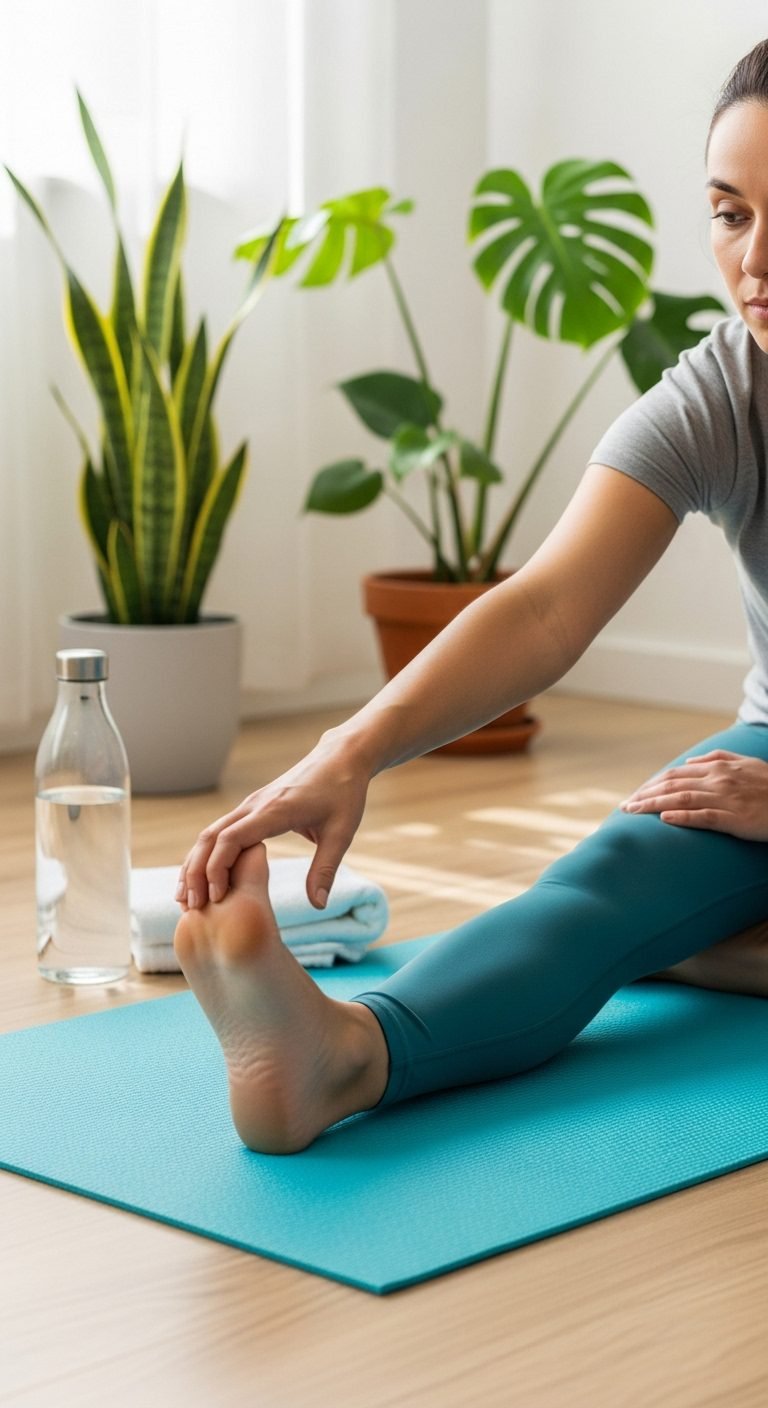
Muscle cramps can be painful, but they don’t have to disrupt your life. Through simple natural remedies like warm compresses, stretching, hydration, mineral-rich foods, massage, and gentle movement you can support your muscles and reduce the frequency of cramps.
These remedies are safe, easy to apply at home, and help you stay connected to your body’s signals in a natural way. By nurturing your muscles daily, you encourage balance, circulation, and relaxation.
✨ Quick Recap of Natural Remedies for Muscle Cramps:
- Warm compress or warm bath 🛁
- Hydration 💧
- Gentle stretching 🧘
- Mineral-rich foods 🥬
- Massage & pressure techniques 💆
- Herbal supports 🌿
- Warm–cool contrast therapy 🌊
- Posture & movement habits 🧍
- Nighttime cramp prevention 🛏️
- Gentle strengthening 🍃
With these natural approaches, you can create a simple and sustainable self-care routine that supports your muscles daily.